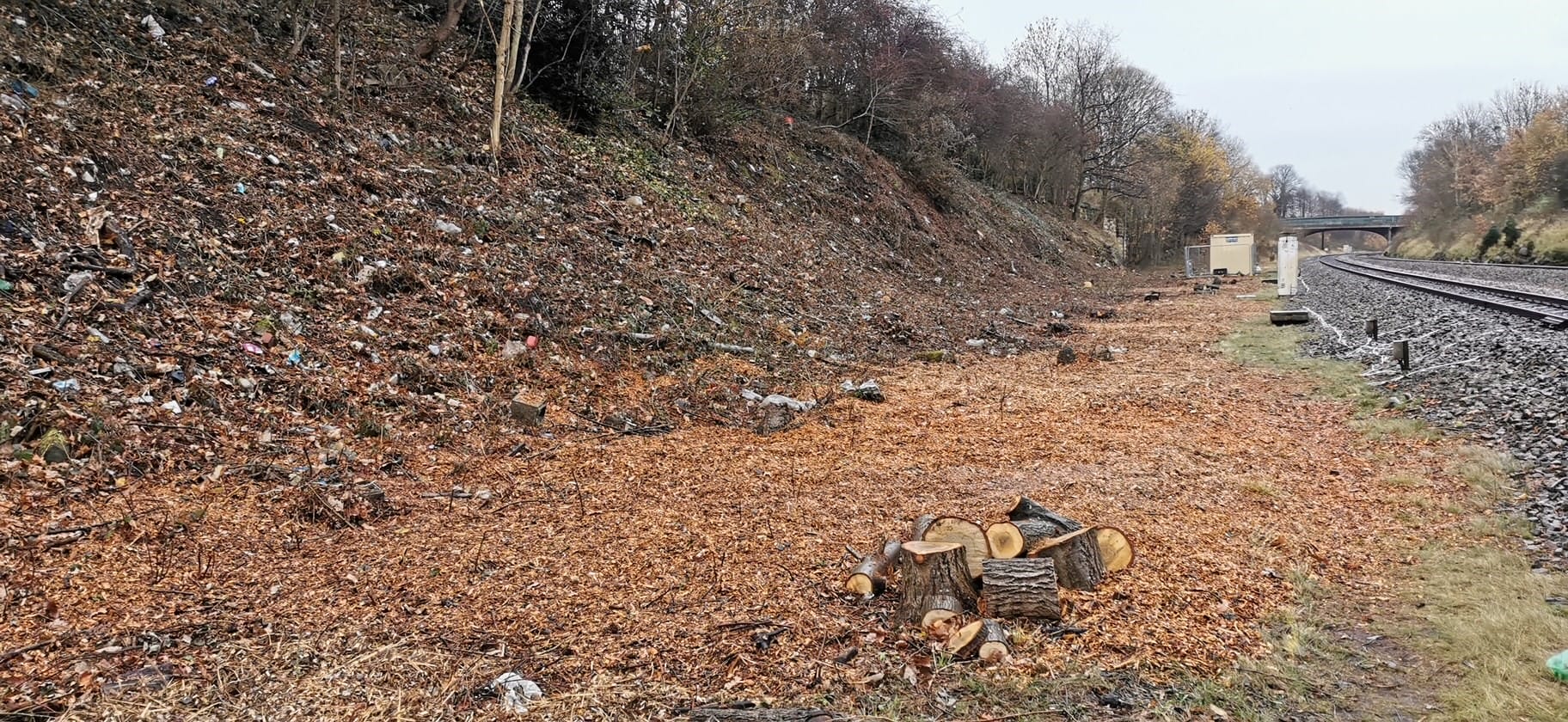
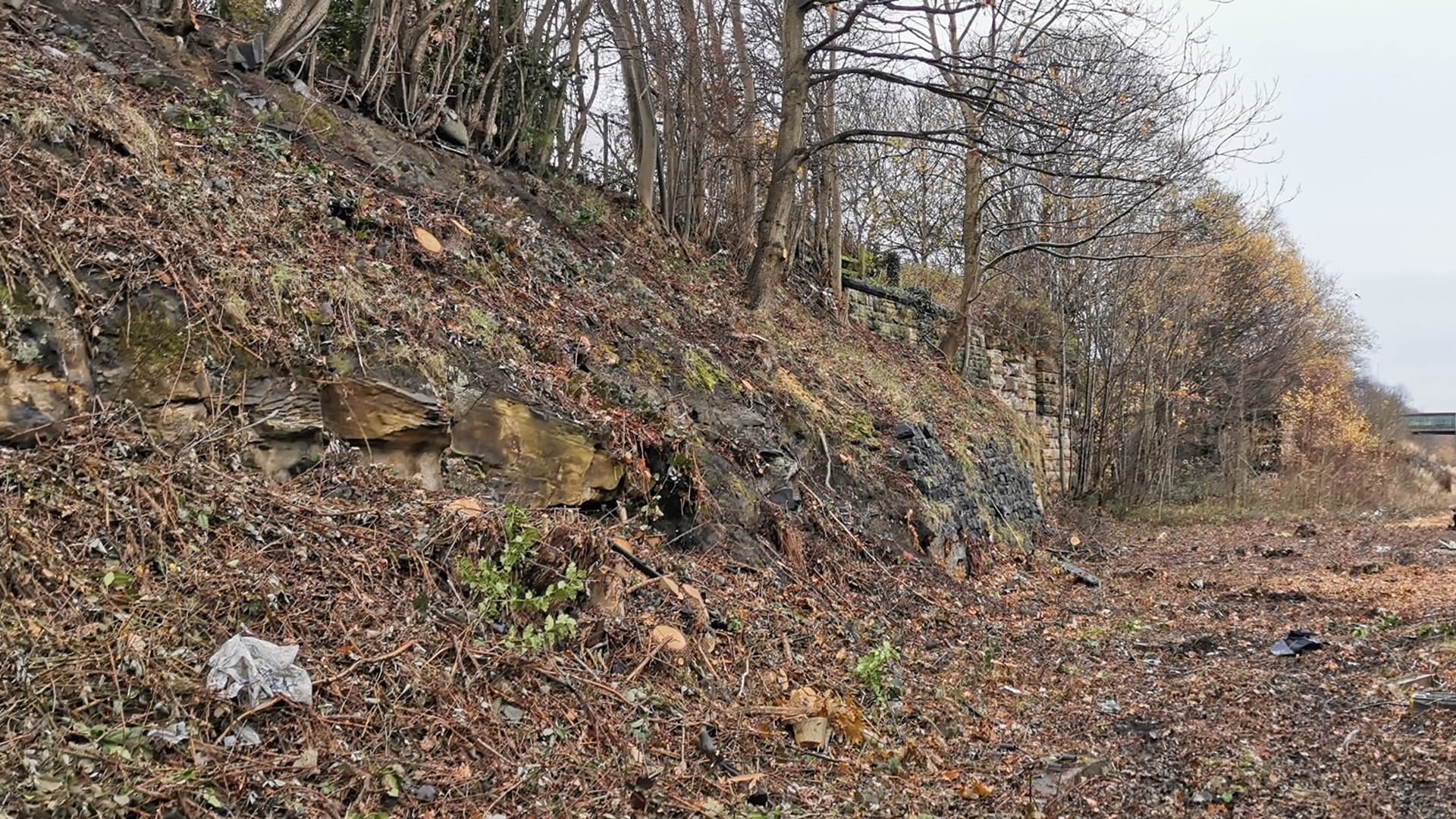
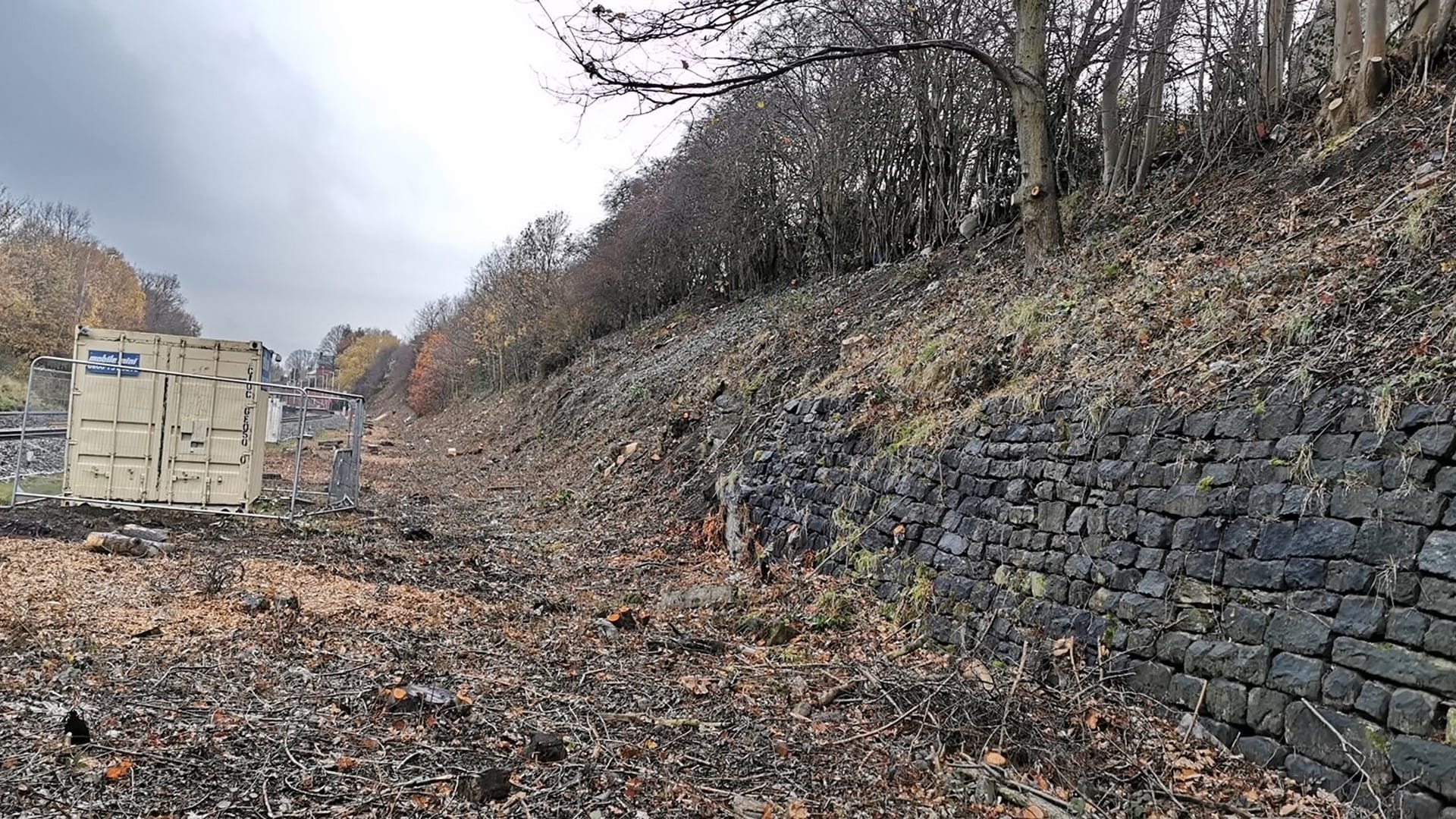
Our team began by removing substantial vegetation that was obstructing the platform cutting. Once cleared, we moved to drilling works on the retaining walls. Using a Marini drill rig mounted on a Road Rail Vehicle (RRV) during Saturday night possessions, alongside hand-operated pneumatic drills, we installed dowels and anchors to support the netting. Anchors were resin-bonded in place, before netting was lowered down the wall face and secured with top and bottom cables fixed with D-shackles.
During daytime shifts, compressed air drills were used to bore anchors to a depth of around two metres at the top of the retaining wall. Hollow threaded bars were then set in place and secured with a specialist grout mix, filling each void completely for maximum stability.
Our IRATA-trained rope access technicians created a safe working system by attaching to palisade posts at the top of the wall. This setup allowed operatives to work securely across the entire area, clipping on and off the safety line as required.
Seventeen anchors were installed and grouted at the top of the retaining wall, with another seventeen set into the trackside bottom using the Marini rig. Bars were locked in position with resin capsules, which hardened within 90 seconds once activated by the turmag. With anchor points secure, the netting was tensioned and fastened to provide lasting protection against rock falls.
We'll discuss all of your options